
Watermelon Resources
For when you want to go beyond social media: long live long-form, long-term, immersive learning & meaningful movement participation.
Suggestions for this page? Reach out here.
What to follow
01 | Organizations
A few I follow to stay up to date with news, community organizing, and context.
If Not Now — for community organizing, active campaigns, & learning. Stay in the loop on IG or via their newsletter. Find your local city chapter. They're "a movement of American Jews organizing our community to end U.S. support for Israel's apartheid system and demand equality, justice, and a thriving future for all Palestinians and Israelis."
Jewish Voice for Peace — a political home for anti-Zionist Jews and a source of learning and engagement for all. Stay in the loop on IG or via their newsletter. Join a local chapter and support a current campaign. In JVP’s words: “Like generations of Jewish leftists before us, we fight for the liberation of all people. We believe that through organizing, we can and will dismantle the institutions and structures that sustain injustice and grow something new, joyful, beautiful, and life-sustaining in their place”
Palestinian Youth Movement — for community organizing & activations like protests. Stay in the loop on IG. Find your local chapter. They're a "transnational, independent, grassroots movement of young Palestinians dedicated to the liberation of our homeland and people."
Standing Together — for community organizing & learning. Stay in the loop on IG and via their newsletter. They're a "grassroots movement mobilizing Jewish and Palestinian citizens of Israel in pursuit of peace, equality, and social and climate justice."
News: Al Jazeera & AJ+
Boycott, Divest, and Sanctions (BDS) Movement — get your money talking like folks did to protest apartheid and other civil injustices throughout history.
Student movement: Students for Justice in Palestine (find local college chapters!)
02 | Stop Cop City x Free Pal
Learn about the links between US policing, miliary, and Iz. This is a great example of why you hear people saying that all liberation is connected — it's because systems of oppression are connected in the first place.
Stop Cop City is a movement fueled by racial justice advocates, Indigenous land defenders, and allies against Atlanta's plans to demolish nearly 400 acres of the Weelaunee Forest (Muskogee land) in a predominantly Black neighborhood to build a militarized police training center. "The plans include military-grade training facilities, a mock city to practice urban warfare, explosives testing areas, dozens of shooting ranges, and a Black Hawk helicopter landing pad."
There are already several Cop Cities around the US (most build after 2020 as a twisted response to protests against police violence). Many, like the one in Atlanta, are directly tied to the IDF/IOF (Iz-i Occupying Forces) and to US-Iz relations. (ex: Cities like Atlanta have well-established programs that send cops to Iz to train with the IOF. They then use those same tactics on Americans, especially against the Black community.)
"Led by Georgia State University, the [GILEE (Georgia International Law Enforcement Exchange)] program facilitates direct training between Georgia Police and the IOF, in part by sending Georgia police to occupied Palestine in order to be trained in racist and hyper-militarized surveillance and policing tactics. The Atlanta Police Foundation has already invited the IOF to train at Cop City if it is built, and APD and Fulton County SWAT team members recently joked about 'capturing H*m*s t*rrorists' while descending upon squatters in an abandoned hotel." Read more here.
03 | The Reject AIPAC Movement
Learn about AIPAC and support the Reject AIPAC movement. This is how and why the political landscape is what it is — it's a major reason why your and my tax money continues to fund Iz.
AIPAC (the American Israel Public Affairs Committee) is the most powerful pro-Iz lobby in the country. Though they've always had tremendous political power, it's only recently (2022) that they began direct electioneering through a new AIPAC super-PAC, which focuses on defeating progressive Democratic who have spoken out in support of Pal. As you can imagine, campaigning against progressive candidates works against all the progressive policies candidates like these champion, both at home and abroad, like reproductive rights and racial justice -- it's all connected.
AIPAC is backed by Republican billionaire mega-donors, and the PAC plans to spend upwards of $100 million on ads to defeat progressive Dems this election cycle. (Read more here.)
In March, a coalition of progressive orgs (including Justice Democrats, US Campaign for Palestinian Rights, Jewish Voice for Peace, IfNotNow, the Working Families Party, Showing Up for Racial Justice, Jews for Racial and Economic Justice, and the Sunrise Movement), launched Reject AIPAC, a campaign that intends to spend as much money as it can to combat AIPAC's influence leading up to Nov. Read about Reject AIPAC, and Track AIPAC political and election spending.
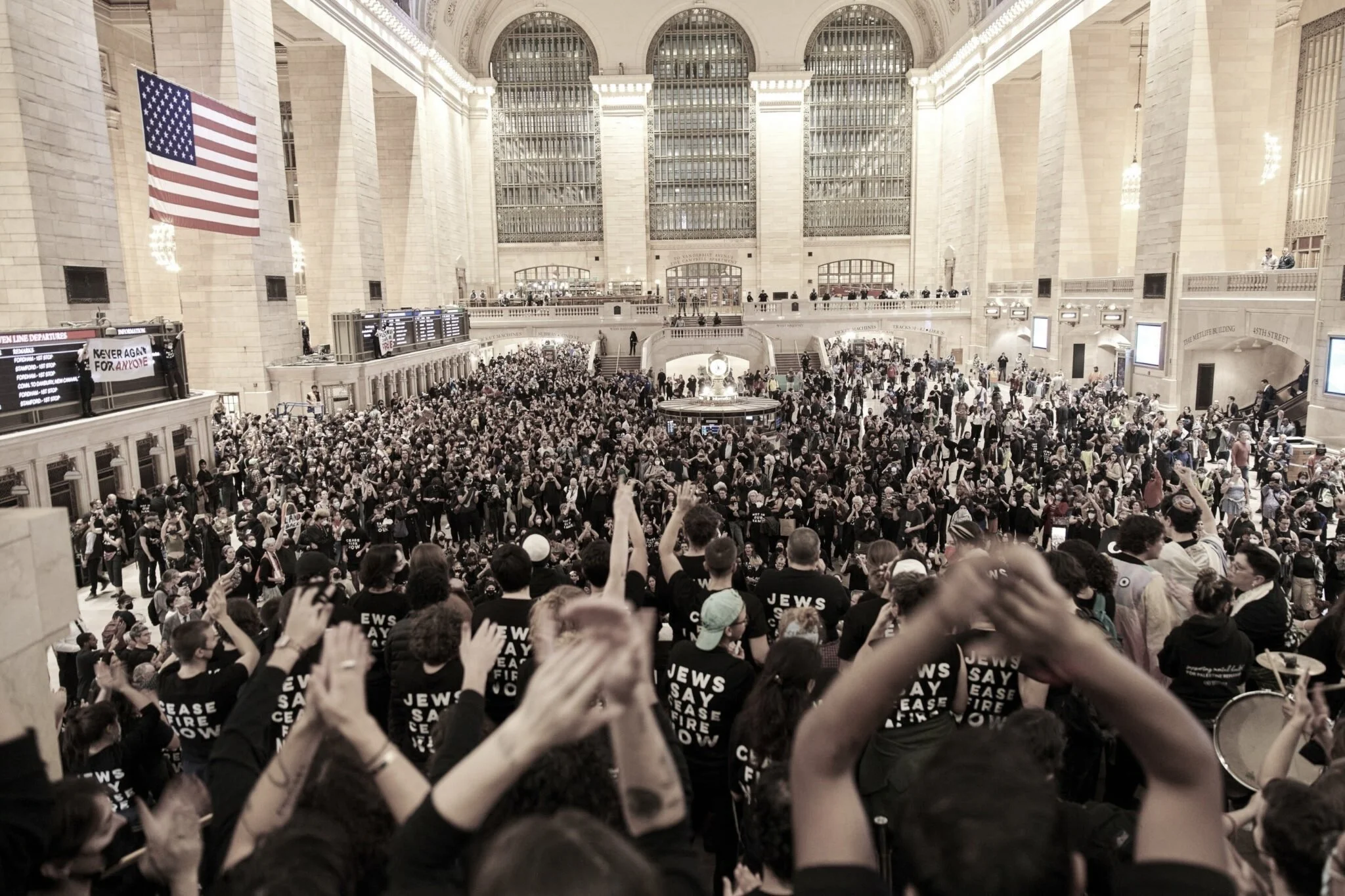
Image credit: Jewish Voice for Peace
What to read
01 | An Excerpt: Israel, Palestine, and the Doppleganger Effect (2 chapters)
by Naomi Klein
A good place to start. Digestible, powerful, and thoughtful in its contextualizing of Jewish oppression and trauma throughout history as well as the occupation and oppression Palestinians live through today.
Naomi Klein, Jewish-Canadian climate justice activist, released a book in September 2023 called Doppleganger. After October 2023, she released two chapters of Doppleganger for free online. In her own words, these chapters "wrestle with many tricky themes, including the persistence of antisemitism as an ancient conspiracy theory, and the dangers of a particular kind of trauma-forged identity politics as they play out in Israel." They "also get into the ongoing debates about how the Nazis were influenced by European colonial and racial segregation in the Americas—and how a failure to reckon with those connections shaped and misshaped Israeli history, and contributed to exiling Palestinians into an unbearable purgatory. Israel-Palestine has been described by many as the “open wound” of the modern world: never healed, never even bandaged. On October 7, 2023, that wound was ripped open in ways we cannot yet begin to comprehend."
02 | Palestine +100: Stories from a Century After the Nakba (book)
edited by Basma Ghalayini
I LOVE speculative fiction!!!! This is a spec fic anthology that spans genres. One of my favorite approaches to deepening understanding.
"Palestine + 100 poses a question to twelve Palestinian writers: what might your country look like in the year 2048 - a century after the tragedies and trauma of what has come to be called the Nakba? [...] Covering a range of approaches - from SF noir, to nightmarish dystopia, to high-tech farce - these stories use the blank canvas of the future to reimagine the Palestinian experience today. Along the way, we encounter drone swarms, digital uprisings, time-bending VR, and peace treaties that span parallel universes. Published originally in the United Kingdom by Comma Press in 2019, Palestine +100 reframes science fiction as a place for political justice and the safekeeping of identity."
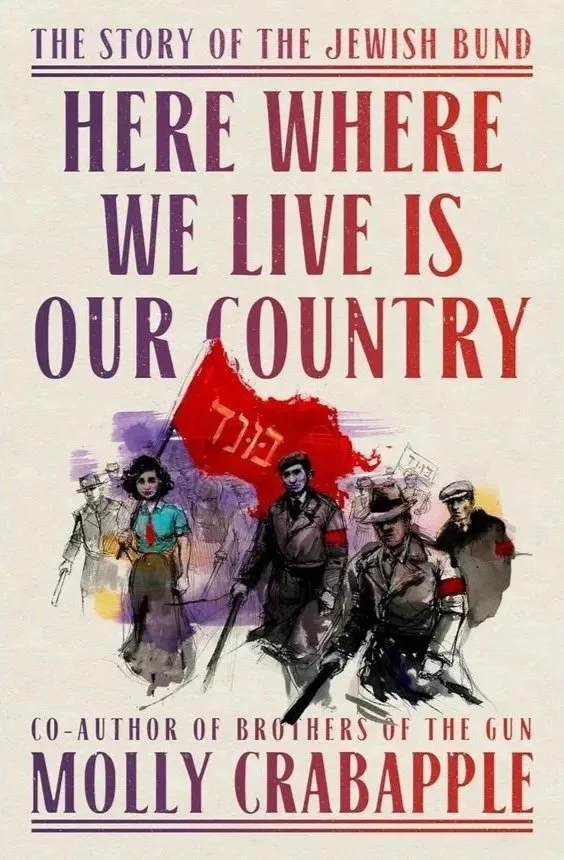
03 | Here Where We Live Is Our Country: The Story of the Jewish Bund (book)
by Molly Crabapple
This book came out in early 2026, and I am still 157th on the library waitlist for it because the appetite for this history is so ravenous. In fact, the book went through some 4 additional print runs within weeks of release to keep up with demand. I can’t wait to get my hands on it.
“An award-winning writer and illustrator follows the story of her grandfather’s involvement in a freewheeling group of Jewish revolutionaries to question whether the world was ready for their vision of multiracial solidarity—and whether we are today.
Molly Crabapple first discovered the story of the Jewish Bund when her mother showed her a trove of her grandfather's old paintings and letters. Sam Rothman was a rough-and-tumble kid who worked at a tannery deep in the Pale of Settlement in 19th century Russia. He discovered that he was an artist--a brilliant interpreter of life in his Jewish village--and soon after that he was a revolutionary, enlisted in the strikes, street fights, and study groups of the Jewish Bund.
Molly saw herself not just in his career but in his revolutionary inclinations--Molly spent much of her life in revolutionary enclaves around the world, marching in the streets and dancing till morning. In the Bund, she discovered a movement of artists, philosophers, working people, and street fighters who had a utopian vision for the world. As Jews--a people always on the margins--they understood themselves as a people who needed special protection. But as Marxist revolutionaries, they also saw themselves as part of an international solidarity that rejected all forms of ethnonationalism. They fought for this vision in the parlors, cafes, battlefields and prison camps. Their ideas sparked the Russian Revolution, which soon swept them aside. They fought with the emerging nationalist movements sweeping Europe. And they battled Zionists over the destiny of the Jewish people, believing that Jews could never find peace by becoming colonizers themselves.”
04 | Light In Gaza (book)
edited by Jehad Abusalim, Jennifer Bing, and Mike Merryman-Lotze
Slowly making my way through this one. The first essay is by Refaat Alareer, Palestinian poet and author of the famous poem "If I Must Die," which he wrote for his daughter in 2011. Refaat was killed in an Iz airstrike in December 2023. His daughter was killed in April 2024.
"Imagining the future of Gaza beyond the cruelties of occupation and Apartheid, Light in Gaza is a powerful contribution to understanding Palestinian experience.
Gaza, home to two million people, continues to face suffocating conditions imposed by Israel. This distinctive anthology imagines what the future of Gaza could be, while reaffirming the critical role of Gaza in Palestinian identity, history, and struggle for liberation.
Light in Gaza is a seminal, moving and wide-ranging anthology of Palestinian writers and artists. It constitutes a collective effort to organize and center Palestinian voices in the ongoing struggle. As political discourse shifts toward futurism as a means of reimagining a better way of living, beyond the violence and limitations of colonialism, Light in Gaza is an urgent and powerful intervention into an important political moment."
05 | The Hundred Years' War on Palestine (book)
by Rashid Khalidi
Comprehensiveee. I recommend the audiobook.
"A landmark history of one hundred years of war waged against the Palestinians from the foremost US historian of the Middle East, told through pivotal events and family history
In 1899, Yusuf Diya al-Khalidi, mayor of Jerusalem, alarmed by the Zionist call to create a Jewish national home in Palestine, wrote a letter aimed at Theodore Herzl: the country had an indigenous people who would not easily accept their own displacement. He warned of the perils ahead, ending his note, "in the name of God, let Palestine be left alone." Thus Rashid Khalidi, al-Khalidi's great-great-nephew, begins this sweeping history, the first general account of the conflict told from an explicitly Palestinian perspective.
Drawing on a wealth of untapped archival materials and the reports of generations of family members--mayors, judges, scholars, diplomats, and journalists--The Hundred Years' War on Palestine upends accepted interpretations of the conflict, which tend, at best, to describe a tragic clash between two peoples with claims to the same territory. Instead, Khalidi traces a hundred years of colonial war on the Palestinians, waged first by the Zionist movement and then Israel, but backed by Britain and the United States, the great powers of the age."
What to watch
01 | Israelism (2023 documentary)
directed by Erin Axelman & Sam Eilertsen
produced by Daniel Chalfen & Nadia Saah
This one blew my f**king mind. Such a powerful survey of the Iz lobby in America, the role Iz plays for many, many in the Jewish community, and the backlash anti-Zionist Jews face for speaking out.
"Two young American Jews travel to Israel seeking a deeper understanding of the country they were raised to love. What they encounter profoundly impacts them, leading them to join a growing movement to redefine their community's relationship with Israel in this challenging and emotional journey. Coming soon to an even wider audience, stay tuned."
Watch on Apple TV or find it via the film’s website.
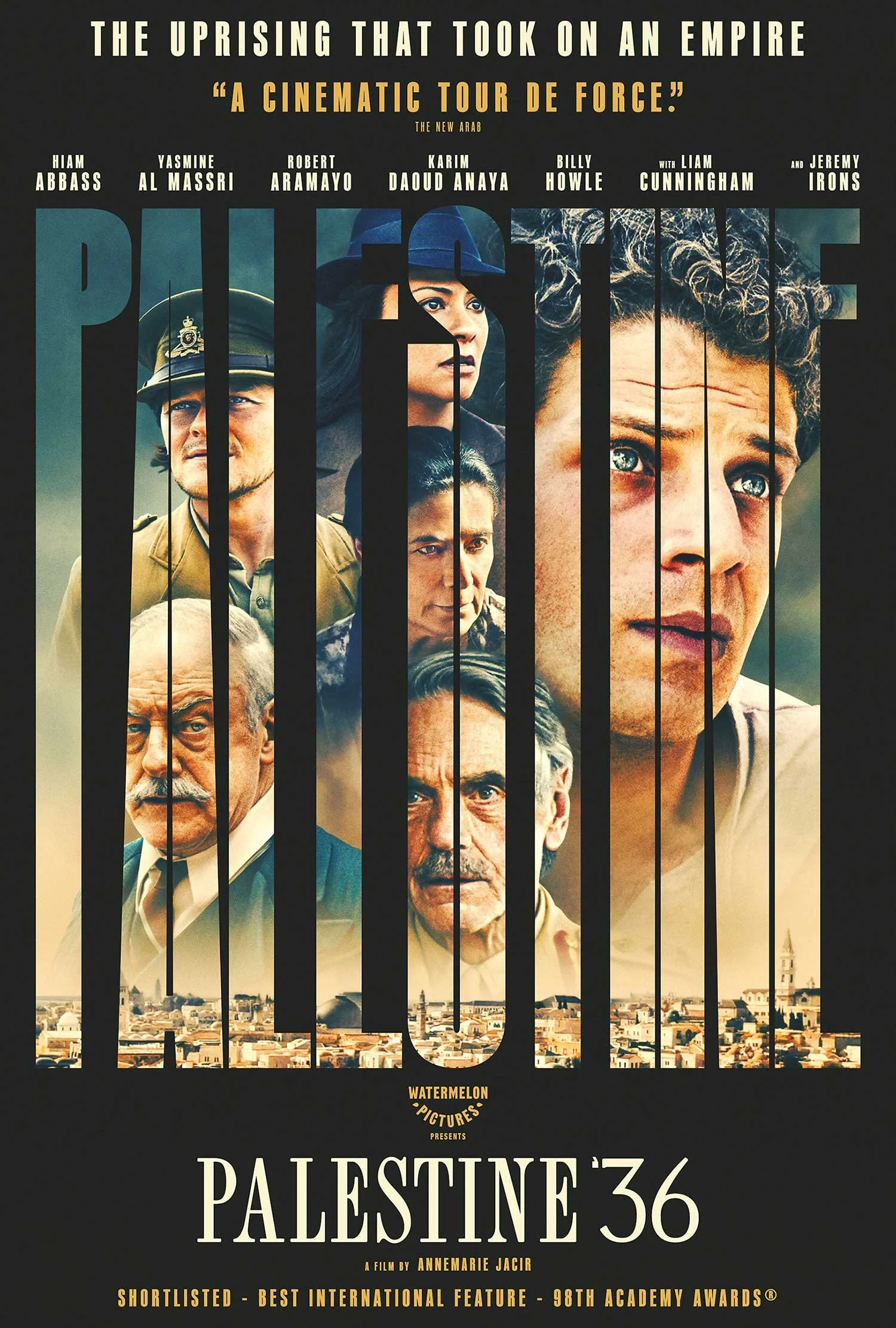
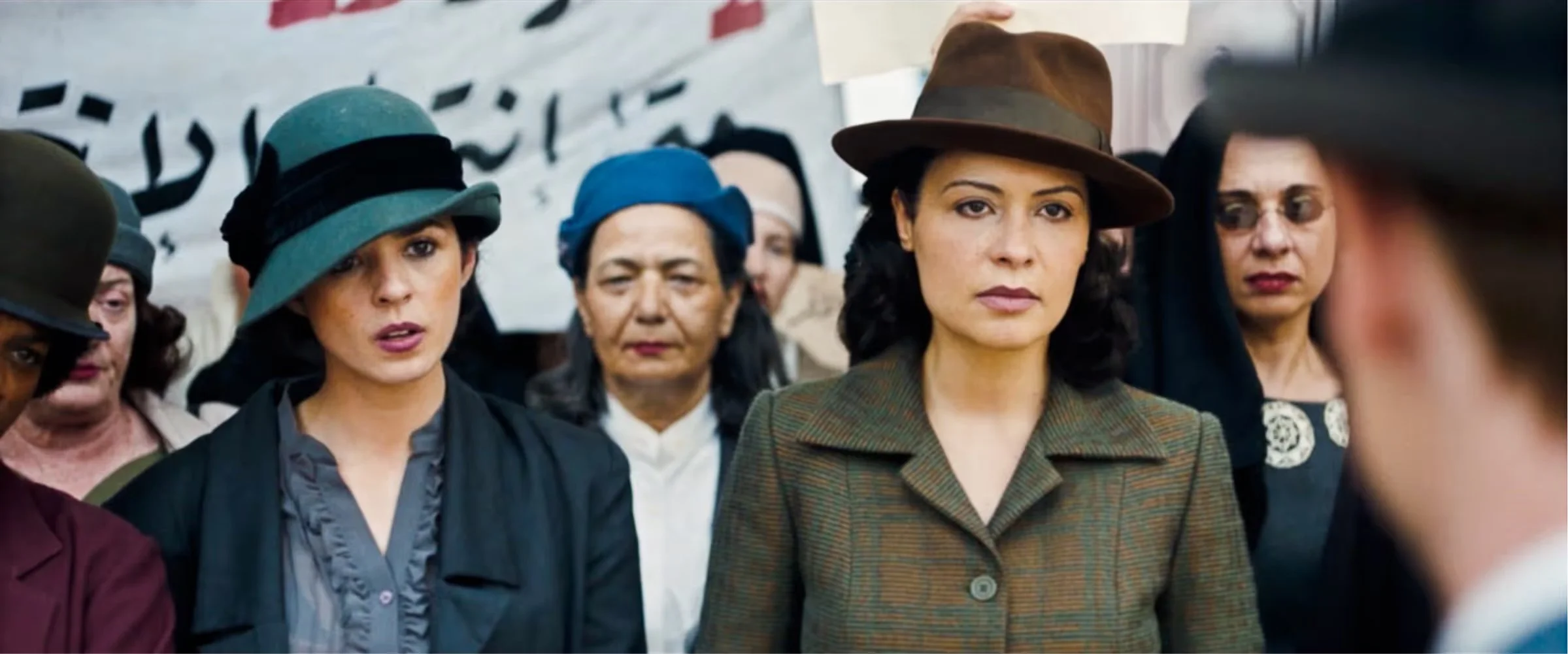
02 | Palestine 36 (2026 film)
by Annemarie Jacir
Y’all this film is the one to watch…I saw it in theater and it kindled within me such a ferocious fire. It’s gorgeous, painful, and powerful, and will leave you feeling like you want to be a revolutionary, too.
“In 1936, as the British Empire tightens its grip on Palestine, Yusuf is caught between his village home and his work in Jerusalem. Amidst an anti-colonial revolt, and Jewish refugees fleeing persecution from Europe, all sides converge in a decisive moment for the entire region. Palestine's Official Selection for the 98th Academy Awards.”
Watch it on Apple TV, Amazon Prime, or via Watermelon Pictures.
03 | 5 Broken Cameras (2011 documentary)
by Emad Burnat and Guy Davidi
My first introduction into Iz-Pal was this film in college. Watch free with a library card or .edu email.
"Winner at the Sundance Film Festival, 5 BROKEN CAMERAS is a deeply personal, first-hand account of non-violent resistance in Bil'in, a West Bank village threatened by encroaching Israeli settlements. Shot almost entirely by Palestinian farmer Emad Burnat, who bought his first camera in 2005 to record the birth of his youngest son, the footage was later given to Israeli co-director Guy Davidi to edit.
Structured around the violent destruction of each one of Burnat's cameras, the filmmakers' collaboration follows one family's evolution over five years of village turmoil. Burnat watches from behind the lens as olive trees are bulldozed, protests intensify, and lives are lost. 'I feel like the camera protects me,' he says, 'but it's an illusion.'
Nominated for Best Documentary Feature at the Academy Awards."
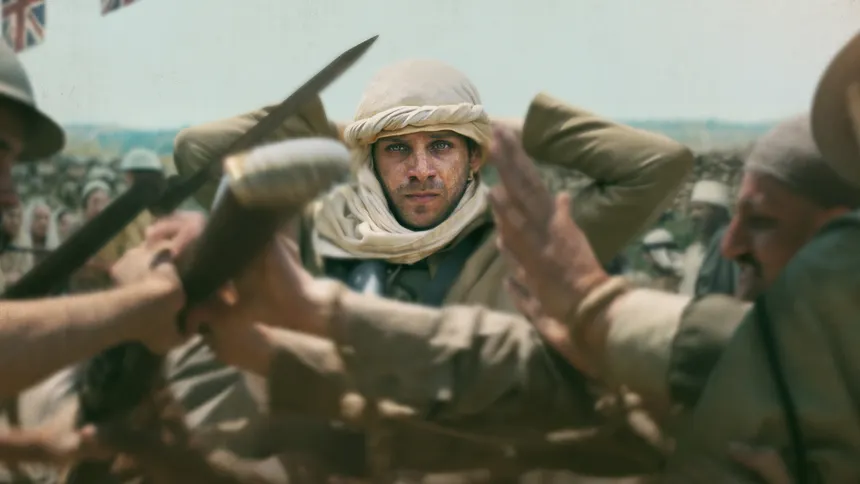
All images from Palestine 36.
I created this resource guide in 2024 as I myself began to move from passive awareness towards meaningful participation in collective action.
Many of us sit on the sidelines during major inflection points (which is the most common version of complicity — by doing so, we’re saying "what's happening is a bummer" but we’re not doing anything to change what's happening). But instead of sitting and watching, we have a chance to deepen our learning and mobilize. Still, we often feel we don't know how or what to do. The lovely thing is, we can always find out. No one was born with all skills and knowledge needed to solve the world’s problems; we all learn along the way, alongside each other, passing down and passing along experience and information to transform our societies together.
So: witness (give a shit), then know your shit (you can start with the resources on this page, and know that this learning will continue to grow), then get involved — put your time, money, physical self, and other resources towards action (resources for that are also above).
Allow yourself to be organized by those who have participated in movements for a lot longer than most of us. I’ve been showing up and learning from them, and I hope you’ll join me.
What is community organizing? Community organizing, as articulated by Tufts, is "a set of methods, practices and strategies that address public problems and also strengthens people’s capacity to work together and exercise power. It comes in many flavors, and community organizers hold diverse of views about how to do it." It's things like agenda-setting (for policy goals), event planning (direct action, community gatherings, activations), and community care (distributing food and water, lending your skills as a health, legal, or media professional, helping organize posters), and so much more.
In short, it’s just being a part of getting shit done in service of the people you care about.
As they say, no one can do everything but everyone can do something. If you, like me, are new to movement spaces, you're not going come in as an organizer with the above skillset. You come in as a community member, willing to show up and be organized by those who know what's up. You attend your first protest, having no idea the vibes and the chants and the etiquette. By the end, you've learned it all. (Seriously, if you’re a citizen and not in an at-risk group, go to one — what you might think is intimidating is actually the energetic power of collective care and an expression of our First Amendment rights. Protests are vibrant gatherings, and therefore they are like medicine, a balm for the soul.) Or maybe you go join Jail Support to greet students who were arrested at encampments as they're released, having no idea what that entails, but by the end of the afternoon you're helping with trash pick-up and you're giving a released student a ride home. This is how I've been learning to participate. We just show up, see where we can lend a hand, and then lend that hand. This is us as community, getting organized.